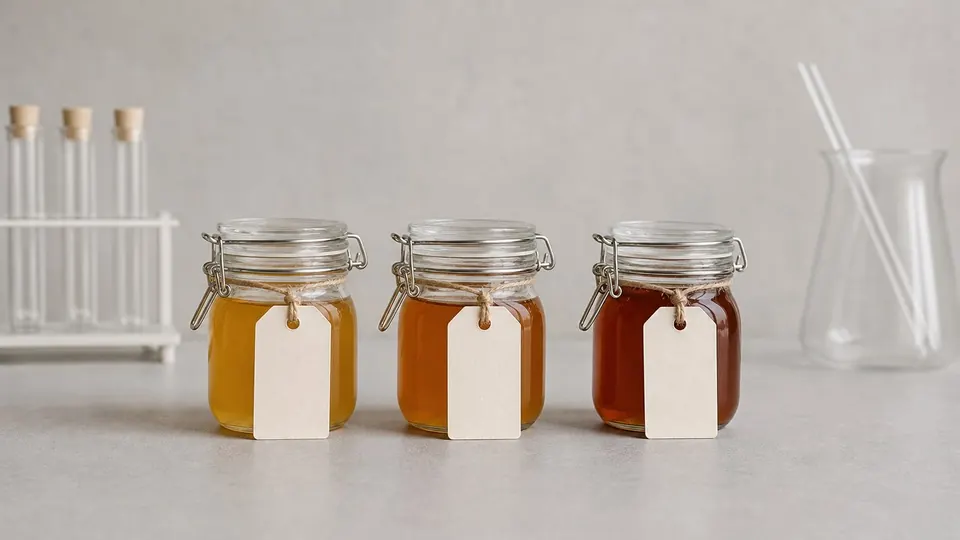
In honey buying, the acceptance decision is made in three stages. Every batch is pre-screened at the intake point, a sample is set aside from any batch that flags, and the laboratory gives the final decision on those samples only. This order makes it possible to decide while the vehicle waits at the gate, and it keeps laboratory cost to suspect batches.
What information is on the intake desk?
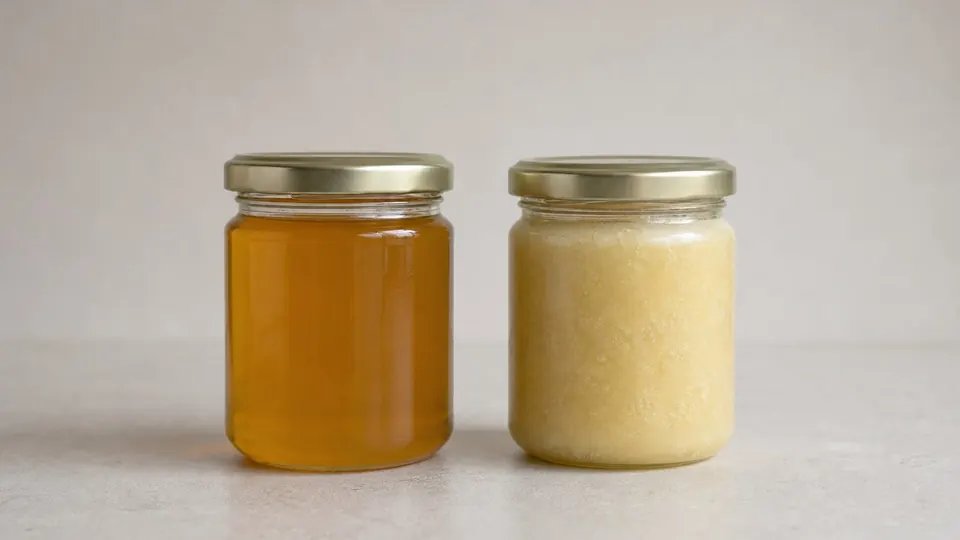
On the busy days of the season, the buyer usually holds the producer's declaration and a visual assessment: the colour is good, the smell is right, the consistency is fine. Added syrup shows in none of these. Syrup does not spoil the colour, does not change the smell and often improves the consistency.
An experienced buyer catches some additions, but that depends on the amount and type. Leave the decision to experience and two batches from the same producer can be treated differently. Why home tests such as water or crystallisation do not work is covered in our post on fake honey.
How do the stages work?
- Pre-screening: at the intake point, for every batch. If nothing flags, the batch flows on.
- Sample: taken from a batch the pre-screen flags, sealed and set aside.
- Laboratory: only for sampled batches. The result is the final decision.
The pre-screen has to happen before the batch is emptied into the tank. Once the honey has joined earlier batches it cannot be separated again, and when a doubt arises months later, which producer it came from can no longer be established.
How does measurement affect the producer relationship?
Measuring at intake can look at first like a step that accuses the producer. When the rules are applied the same way to everyone, the effect is the reverse: arbitrariness goes away. Where there is no measurement, price depends more on bargaining power than on the quality of the honey. Measurements gathered over a season become a history that a producer doing good work can show.
A few rules are written down at the start:
- The pre-screen is applied the same way to every batch.
- The result is shared with the producer the same day.
- Thresholds are set at the start of the season and not changed during it.
- A witness sample is set aside for challenges.
How is Beevex used in the pre-screen?
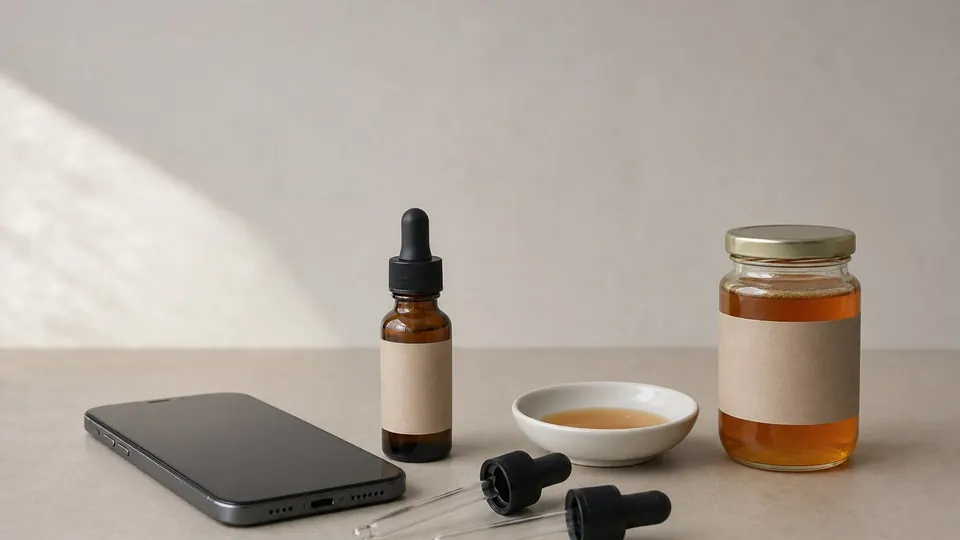
The Beevex kit contains an amber 30 ml dropper bottle of pH-standard liquid, four glass droppers and a white dish. Five drops of honey go onto the liquid in the dish. The mobile app photographs the dish from above twice: first in its initial state, then after the drops have merged with the liquid. The result comes back as genuine, questionable or syrup added and is recorded with the batch details. Beevex does not replace the second and third stages; it decides which batch goes to the lab.