In Türkiye, honey can be tested at the food control laboratories of the Ministry of Agriculture and Forestry, at the Beekeeping Research Institute, at university central laboratories and at private laboratories authorised by the Ministry. Published lists show core quality tests taking 1 to 5 days under normal conditions, with sample transit and reporting on top. The test package should follow from the question the report has to answer, not from how many lines it contains.
Where can honey be tested?
The Ministry lists 41 of its own laboratories: 39 Food Control Laboratory Directorates, the Bursa Central Research Institute for Food and Feed Control, and the National Food Reference Laboratory. The same page links contact lists for these and for authorised private laboratories. Scope differs from one laboratory to the next, as these examples show:
| Laboratory | Examples from its published honey scope | What to check |
|---|---|---|
| National Food Reference Laboratory | Moisture, sugars, HMF, diastase, proline, conductivity, pollen, δ13C and C4, naphthalene, foreign sugar by NMR | The NMR line is marked "not accredited" in the 2025 list |
| Çanakkale Food Control Laboratory | Moisture, conductivity, HMF, sugars, diastase, proline | No δ13C or C4 line in the 2026 list |
| Beekeeping Research Institute (Ordu) | Moisture, HMF, diastase, proline, sugars, C13 and C4 by IRMS, antibiotic screening | Its page names accreditation as a goal; ask for the current status |
| Çukurova University ÇÜMERLAB | Diastase, HMF, sugars, C13/C12 and %C4 | TÜRKAK certificate valid to 20.08.2029 while compliance continues |
| Authorised private laboratories | See the Ministry list | Ask about scope test by test |
An exporter outside Türkiye can apply the same logic locally: find the national accreditation body, then check scope line by line.
Which test answers which question?
| The question | The test to order |
|---|---|
| Does it meet the Turkish Communiqué on Honey? | Moisture, sugars, HMF, diastase, conductivity, free acidity, proline, water-insoluble matter |
| Has it been heated or badly stored? | HMF and diastase |
| Is corn or cane sugar present? | δ13C, protein difference and C4 |
| Is rice, wheat or beet syrup suspected? | Sugar profile plus an advanced method; ask the laboratory about scope |
| Is the declared floral source right? | Pollen and conductivity |
| Are residues present? | Naphthalene and antibiotic screening |
Our honey analysis report guide puts every limit, and what each line cannot show, in one table. See also what a C4 test misses and, if a buyer wants NMR, what an NMR test shows. For a batch with a buyer attached, agree the test list in writing first; our EU export guide covers the EU side.
How long does honey testing take?
Two public laboratories publish turnaround and minimum sample size:
| Test | Çanakkale, 2026 list | National Reference, 2025 list |
|---|---|---|
| Moisture | 1 day, 50 g | 3-5 working days, min. 50 g |
| Electrical conductivity | 1 day, 100 g | 3-5 working days, min. 50 g |
| HMF | 2 days, 250 g | 3-5 working days, min. 50 g |
| Sugar composition | 2 days, 250 g | 3-5 working days, min. 50 g |
| Diastase | 2-3 days, 100 g | 3-5 working days, min. 50 g |
| Proline | 2-3 days, 100 g | 3-5 working days, min. 50 g |
| δ13C and C4 | Not listed | 3-5 working days, min. 50 g |
| Pollen | Not listed | 3-5 working days, min. 250 g |
| Foreign sugar by NMR | Not listed | 3 working days, min. 100 g, unopened original packaging |
Read these as analysis times, not delivery dates. Çanakkale says its figures exclude events such as instrument failure and heavy sample load. The Bursa institute says the total for analysis and reporting is available from its sample reception unit. Sample sizes apply to private requests; Çanakkale notes that inspection, export, import and official samples follow the amounts set in legislation.
How do you check accreditation?
Accreditation is not a blanket label on a laboratory. It is granted for a product, a test and a method. In Çanakkale's 2026 list, the honey moisture line carries the TÜRKAK accreditation mark while the diastase and proline lines do not. The National Reference list states the status on every line.
The question to ask is: is this test, by this method, on honey, within your accredited scope? The answer sits in the scope annex to the certificate, which lists the product, test name and method separately. Check the certificate's validity date at the same time, and confirm a Turkish laboratory's accreditation number on the TÜRKAK website.
What should you do before sending a sample?
- Get the buyer's or inspector's required test, method and accreditation condition in writing.
- Call sample reception to confirm scope, current turnaround and the request form. The Bursa institute asks for this before samples are sent.
- Label the sample with batch number, supplier and date. A report that cannot be tied to a batch does not answer a query.
- Send it in closed, undamaged packaging, which the National Reference list sets as an acceptance criterion.
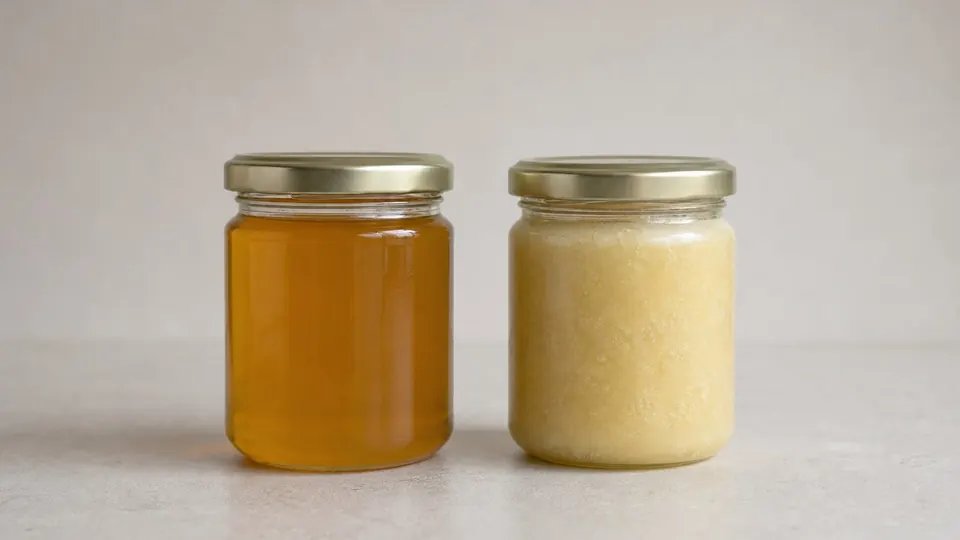
- Do not melt a crystallised sample first. The Codex honey standard says honey intended for HMF or diastase testing must not be heated; our crystallisation post has the detail.
- Keep a sealed retention sample from the same batch.
Where does Beevex fit?
Beevex does not replace laboratory analysis; it helps decide at intake which batch goes to the laboratory. Five drops from the batch are assessed in the kit's test dish with the mobile app, and the result is recorded against the batch as genuine, questionable or syrup added. A questionable batch is set aside for further investigation. Beevex does not measure HMF, moisture, diastase, proline or floral source. See how collection centres use it.
Sources
- Ministry of Agriculture and Forestry, affiliated and authorised food control laboratories
- National Food Reference Laboratory, 2025 analysis list
- Çanakkale Food Control Laboratory, 2026 analysis list
- Bursa Central Research Institute for Food and Feed Control, analysis list and sample reception
- Beekeeping Research Institute, laboratory activities
- Çukurova University ÇÜMERLAB, TÜRKAK accreditation certificate AB-2067-T
- Turkish Accreditation Agency (TÜRKAK)
- Turkish Food Codex Communiqué on Honey (No. 2020/7), Annexes 1 and 2
- Codex Standard for Honey, CODEX STAN 12-1981 Rev. 1 (1987), FAO