A honey NMR test is a profiling screen that compares the honey's 1H-NMR spectrum with a reference database of authentic honeys. It shows whether the overall profile departs from what is expected, rather than measuring one compound. The result depends on the database used and a non-compliant finding needs confirming by another method. Field screening does not replace NMR; it helps decide which batches go on to the laboratory and to NMR.
How does honey NMR testing work?
The UK Food Standards Agency (FSA) describes NMR as a tool that gives a detailed chemical profile of a food, a fingerprint specific to the sample that can be compared with other results. A laboratory presentation at a 2019 International Honey Commission (IHC) workshop explains that the method entered routine honey analysis in 2013 and is non-targeted: instead of looking for individual markers, it compares the spectrum with a database of authentic honeys.
So an NMR report is not a single measurement such as a "syrup percentage". The strength of its conclusion rests on the database as much as on the sample.
Which questions does NMR answer?
The same presentation rated the main methods as follows. Treat this as one laboratory's view from 2019, not an official classification, and expect the picture to have moved.
| Question | 13C EA/LC-IRMS | 1H NMR | LC-HRMS | Pollen, sensory |
|---|---|---|---|---|
| C4 sugars | Good | Moderate | Good | Poor |
| C3 sugars | Moderate | Moderate | Good | Poor |
| Tailor-made syrups | Poor | Poor | Good | Poor |
| Illegal processing (resin) | Poor | Good | R&D | Moderate |
| Moisture reduction | Poor | Moderate | R&D | Moderate |
| Type and origin | Poor | Moderate | R&D | Good |
The presentation calls NMR well suited to general screening but not the most sensitive method for adulteration, with a detection limit above 15%. It adds a 2018 finding that certain tailor-made syrups could still pass at 30-40% levels, and states plainly that non-compliant results need confirmation by complementary methods. Our C4 post covers the limits of carbon isotope testing.
Why does the database matter so much?
According to the same presentation, there was at that time no harmonised, publicly available reference database. Comparable results required laboratories to use the same procedure, instrument and database, and new database releases could change the interpretation. It also reports more than 98% agreement between the main commercial databases, a figure worth weighing knowing it comes from a laboratory offering the method.
Public bodies raise concerns at the same point:
- FSA (2021): interpretation depends on a reference database of authenticated samples, which should reflect beekeeping practice, origin, season and climate. No single test can definitively determine authenticity, and local authorities should not take enforcement action on NMR results alone.
- UK seminar (2019): at a seminar held by the Government Chemist, Defra, FSA and Food Standards Scotland, NMR had support as a tool, but participants agreed that on the available evidence it was not yet suitable for detecting exogenous sugars in honey for enforcement. They cited a lack of information on the databases and on interlaboratory comparisons.
- European Commission (2023): its "From the Hives" report says improved, harmonised and internationally recognised analytical methods are still needed.
- Defra review (2025): the tests it ranks among the most important for surveillance include EA/LC-IRMS and LC-HRMS for a rice-specific marker.
What is the position in Türkiye?
Under the "decision criteria" added to the Communiqué on Honey in 2023, results of authenticity analyses are assessed against criteria announced by the Ministry, and a criterion applies in official controls three months after publication. The Ministry has said techniques such as mass spectrometry and NMR will be used in official controls. Check the Ministry's site for the criteria currently in force.
The National Food Reference Laboratory's 2025 list includes foreign sugar analysis by NMR: at least 100 g, unopened original packaging, 3 working days, not accredited. Our guide to honey testing covers choosing a laboratory.
What should the contract say?
When a buyer simply says "NMR report" and these points stay open, a dispute is more likely to be about the interpretation than the result itself:
- Laboratory: whose report is accepted, and is accreditation required?
- Method and database: which database and release will be used, and will the report state it?
- Non-compliance: which output means rejection, and which only means suspicion?
- Confirmation: which second method confirms a non-compliant batch, and who decides?
- Sample: who takes it, in what packaging, and how many retention samples are kept?
- Timing: is the test run on the batch before blending or on the blend being shipped?
Our post on export queries covers the other records a buyer looks for.
Where does field screening stop?
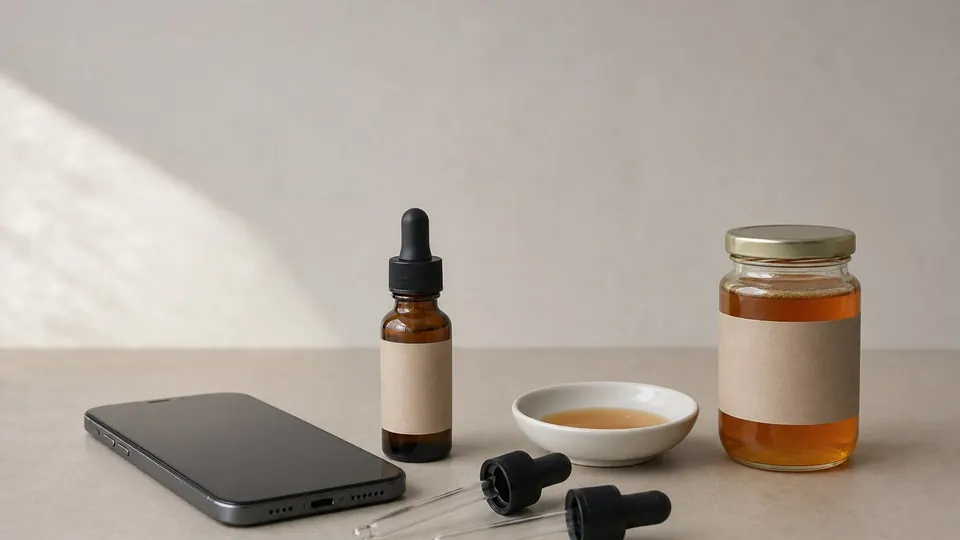
Beevex does not measure NMR, does not claim to predict an NMR result and does not replace the laboratory report a buyer asks for. Its place is at the start of the chain:
- Genuine: the batch moves on. If the contract requires NMR, it is sent according to the sampling plan.
- Questionable: the batch is set aside, sampled and kept out of the blend until the result arrives.
- Syrup added: the batch is set aside and not taken into the export lot; a retention sample goes to the laboratory if the result is disputed.
The result from five drops is recorded with batch, supplier and date, so the file shows how each batch in a blend was assessed at intake. See how exporters use it.
Sources
- International Honey Commission workshop, Authenticity of Honey: Current Issues and Update on New Analytical Trends, May 2019
- Food Standards Agency, From beehive to jar: honey authenticity explained, March 2021
- Government Chemist, Defra, FSA and FSS, Honey authenticity: determination of exogenous sugars by NMR, seminar report, 2019
- European Commission, EU coordinated action "From the Hives" (Honey 2021-2022)
- Defra, Review of methods applied in the "From the Hives" survey on honey authenticity, 13 February 2025
- Communiqué amending the Communiqué on Honey (No. 2023/37), Official Gazette, 24 November 2023
- Ministry of Agriculture and Forestry, amendment to the Turkish Food Codex Communiqué on Honey
- National Food Reference Laboratory, 2025 analysis list